Baru
The binding constraint to accelerating sustainable, inclusive growth is that Indonesia exploits neither the benefits of being a large country nor its international dynamic comparative advantage. Indonesia is beset by local economic fragmentation and global economic marginalization. At present, the sum is worth less than the parts.
Based on Indonesia history and current situation, the nation has a choice of three future development paths: reactive, proactive and transformative. Reactive best describes the government current approach of muddling through; proactive refers to policies pursued in response to past major crises such as widespread malnutrition and rural poverty in the 1960s and the collapse of oil prices in the 1980s; and transformative, or fundamental metamorphosis, characterizes the policies that enabled the Four Asian Tigers to become high-income nations.
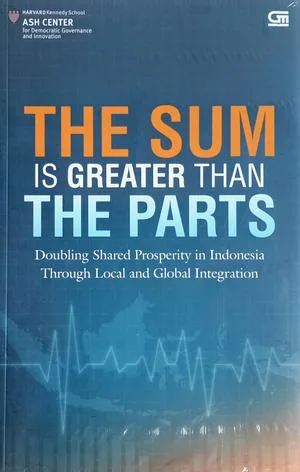
The Sum Is Greater Than The Parts
oleh Harvard Kennedy School · Gramedia Pustaka Utama
Rp99.000
Stok tersedia · dikirim 1×24 jam kerja
- Penulis
- Harvard Kennedy School
- Penerbit
- Gramedia Pustaka Utama
- ISBN 13
- 978-979-229-967-0
- ISBN 10
- 979-22-9967-X
- Halaman
- 274
- Sampul
- Paperback
- Bahasa
- Inggris
- Berat
- 400 gram
- Dimensi
- 23 × 15 × 1,8 cm
Ongkir
Ongkir dihitung otomatis saat checkout.
Sinopsis
The government of Indonesia primary development objective is to join the ranks of upper middle-income countries by 2025. If Indonesia could generate an annual real GDP per capita growth rate of 8.5 percent for the next ten years, it would be well on the path to achieving this objective. At current projections, this will not be possible. It will fall short in three fundamental dimensions: growth will be jobless, competitiveness will decline and inequality will rise.The binding constraint to accelerating sustainable, inclusive growth is that Indonesia exploits neither the benefits of being a large country nor its international dynamic comparative advantage. Indonesia is beset by local economic fragmentation and global economic marginalization. At present, the sum is worth less than the parts.
Based on Indonesia history and current situation, the nation has a choice of three future development paths: reactive, proactive and transformative. Reactive best describes the government current approach of muddling through; proactive refers to policies pursued in response to past major crises such as widespread malnutrition and rural poverty in the 1960s and the collapse of oil prices in the 1980s; and transformative, or fundamental metamorphosis, characterizes the policies that enabled the Four Asian Tigers to become high-income nations.
Ulasan pembeli
Belum ada ulasan
Jadilah yang pertama memberi ulasan setelah buku ini sampai di tanganmu.
Sudah membeli buku ini? Masuk untuk menulis ulasan.
Dari rak yang sama
Mungkin kamu suka