Bekas · Sangat Baik
Characterized by long-term mutual dependence, continuing contributions of technology or products from both sides, and shared managerial control, the new alliances have become an integral component of the participating firms' competitive strategies. Moreover, beyond crossing national boundaries, such partnerships now frequently exist between rivals in the same industry or between firms in industries thought to be entirely unrelated.
Strategic Alliances is the first book to treat the new alliances comprehensively as instruments of long-term competitive advantage rather than as short-term defensive maneuvers. The authors blend a thorough discussion of theory and strategy with a practical blueprint for managers that reveals the risks as well as the rewards of choosing an alliance strategy. Drawing from extensive field research and interviews with managers of successful alliances like Ford/Mazda, Nike/Nissho, Toshiba/Motorola, and IBM/Siemens, the authors' road map for forging and managing these new relationships includes rethinking the business, crafting an alliance strategy, structuring an alliance, and evaluating the alliance in a constantly iterative process.
The authors show that alliance management is essentially an entrepreneurial activity that requires a fundamental reexamination of the firm's value chain; continuous innovation in marketing; technology, and distribution; and the cultivation of organizational flexibility. Thus, the new alliances present a different set of challenges, including the need to develop new management skills.
Strategic Alliances explores the key issues of cooperation versus competition, differing expectations among participants, managing information flows both internally and externally, and the role of the alliance manager and top management in creating a firm-wide alliance culture. The authors argue that the greatest challenge for executives lies in continuously developing organizational process innovations to manage not just one or two of these relationships, but entire networks of dynamic alliances. Those who do so successfully will fare best in the highly competitive global arena.
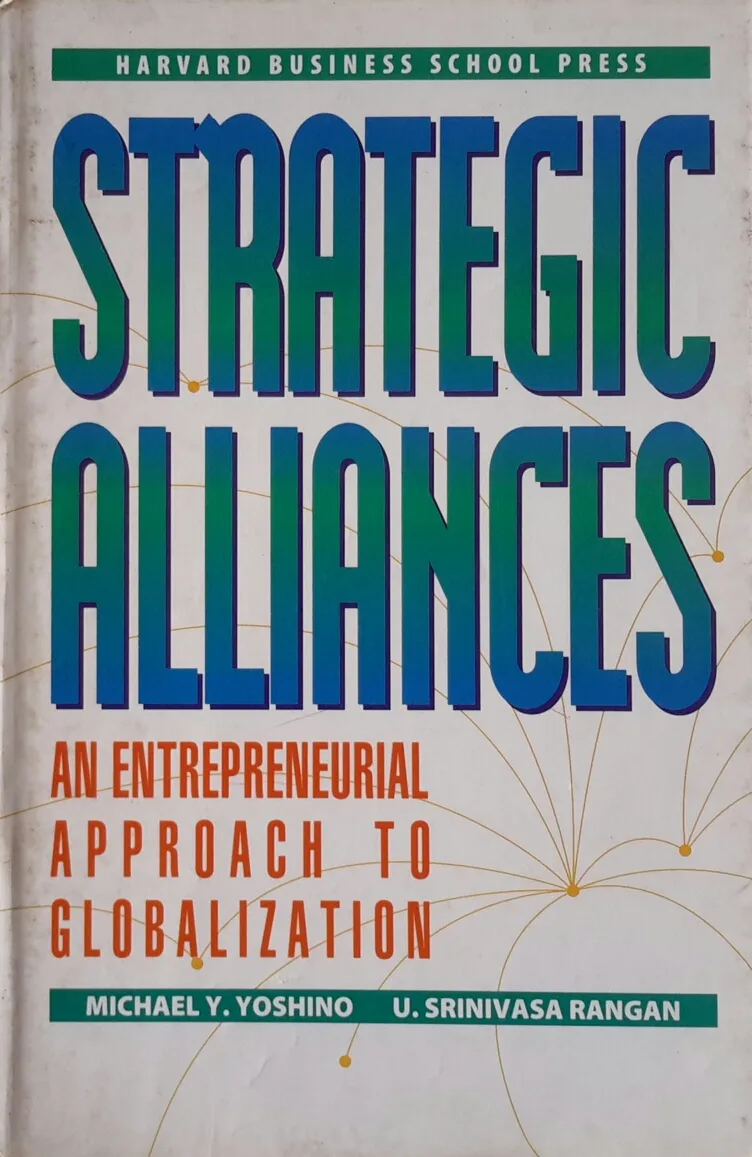
Strategic Alliances
oleh Michael Y. Yoshino, U. Srinivasa Rangan · Harvard Business School Press
Rp299.000
Stok tersedia · dikirim 1×24 jam kerja
- Penulis
- Michael Y. Yoshino, U. Srinivasa Rangan
- Penerbit
- Harvard Business School Press
- ISBN 13
- 978-0-87584-584-5
- ISBN 10
- 0-87584-584-3
- Halaman
- 260
- Sampul
- Hardcover
- Bahasa
- Inggris
- Berat
- 750 gram
- Dimensi
- 24 × 16 × 2,5 cm
Ongkir
Ongkir dihitung otomatis saat checkout.
Sinopsis
The rise of intense global competition has spawned hundreds of cross-border relationships between firms in the form of sourcing agreements, joint research and development arrangements, and logistics coalitions. At first, these links were forged by companies simply to gain entry to new markets and were managed by a series of ad hoc moves made to comply with local government pressures. Over time, however, the fundamental nature of these interfirm relationship has changed. Companies are expanding and deepening existing relationship and entering into new more entrepreneurial alliances.Characterized by long-term mutual dependence, continuing contributions of technology or products from both sides, and shared managerial control, the new alliances have become an integral component of the participating firms' competitive strategies. Moreover, beyond crossing national boundaries, such partnerships now frequently exist between rivals in the same industry or between firms in industries thought to be entirely unrelated.
Strategic Alliances is the first book to treat the new alliances comprehensively as instruments of long-term competitive advantage rather than as short-term defensive maneuvers. The authors blend a thorough discussion of theory and strategy with a practical blueprint for managers that reveals the risks as well as the rewards of choosing an alliance strategy. Drawing from extensive field research and interviews with managers of successful alliances like Ford/Mazda, Nike/Nissho, Toshiba/Motorola, and IBM/Siemens, the authors' road map for forging and managing these new relationships includes rethinking the business, crafting an alliance strategy, structuring an alliance, and evaluating the alliance in a constantly iterative process.
The authors show that alliance management is essentially an entrepreneurial activity that requires a fundamental reexamination of the firm's value chain; continuous innovation in marketing; technology, and distribution; and the cultivation of organizational flexibility. Thus, the new alliances present a different set of challenges, including the need to develop new management skills.
Strategic Alliances explores the key issues of cooperation versus competition, differing expectations among participants, managing information flows both internally and externally, and the role of the alliance manager and top management in creating a firm-wide alliance culture. The authors argue that the greatest challenge for executives lies in continuously developing organizational process innovations to manage not just one or two of these relationships, but entire networks of dynamic alliances. Those who do so successfully will fare best in the highly competitive global arena.
Ulasan pembeli
Belum ada ulasan
Jadilah yang pertama memberi ulasan setelah buku ini sampai di tanganmu.
Sudah membeli buku ini? Masuk untuk menulis ulasan.
Dari rak yang sama
Mungkin kamu suka